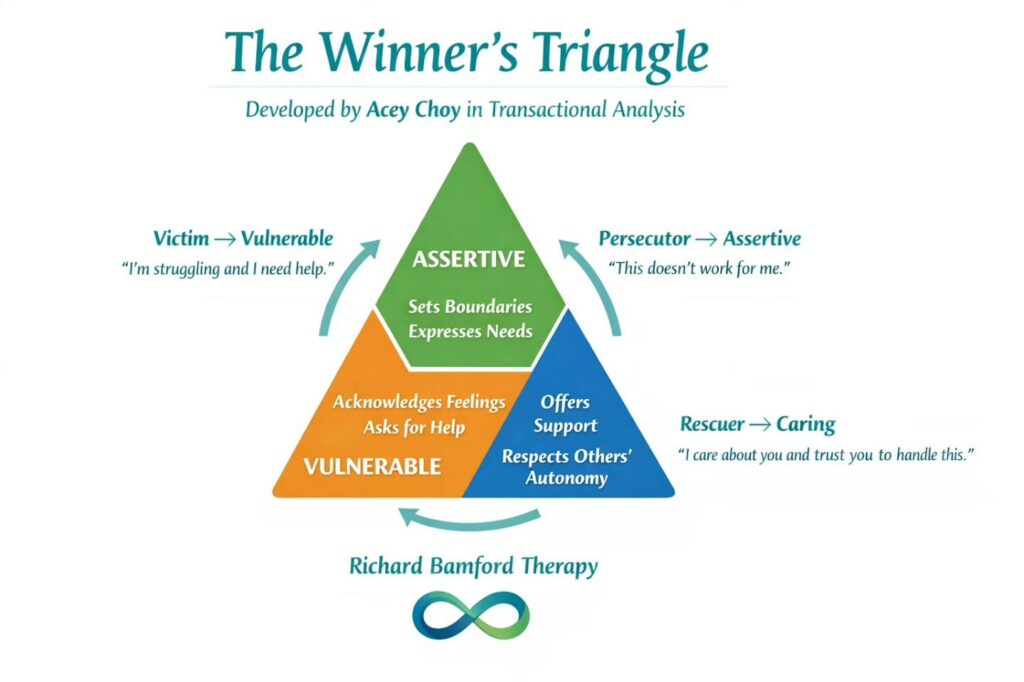
The Winner’s Triangle: A Healthier Alternative to the Drama Triangle
In relationship dynamics, people can sometimes fall into unhelpful roles without realising it. The Winner’s Triangle, developed by Acey Choy, offers a healthier alternative to the well-known Drama Triangle described by Stephen Karpman.
In the Drama Triangle, people tend to move between three roles:
- Victim – feeling powerless or overwhelmed
- Rescuer – stepping in to fix or take responsibility for others
- Persecutor – criticising, blaming, or controlling
These roles often keep conflict going rather than resolving it.
The Winner’s Triangle replaces these roles with more constructive positions that support responsibility, respect, and emotional awareness.
The Three Positions
Vulnerable (instead of Victim)
Being vulnerable means acknowledging your feelings and needs honestly, without seeing yourself as powerless. It’s about saying things like “I’m struggling with this and could use some support.”
Caring (instead of Rescuer)
Caring involves offering support while respecting the other person’s autonomy. Instead of fixing or taking over, you stay compassionate while allowing others to solve their own problems.
Assertive (instead of Persecutor)
Assertiveness replaces blame or criticism with clear, respectful communication. It means expressing your needs, boundaries, or frustrations directly without attacking the other person.
Why It Matters
The Winner’s Triangle helps shift relationships from reactive patterns to responsible and respectful communication. Instead of rescuing, blaming, or feeling powerless, people learn to:
- express vulnerability safely
- offer support without overstepping
- communicate needs clearly and respectfully
When people move into these healthier roles, conversations often become calmer, more collaborative, and more productive.